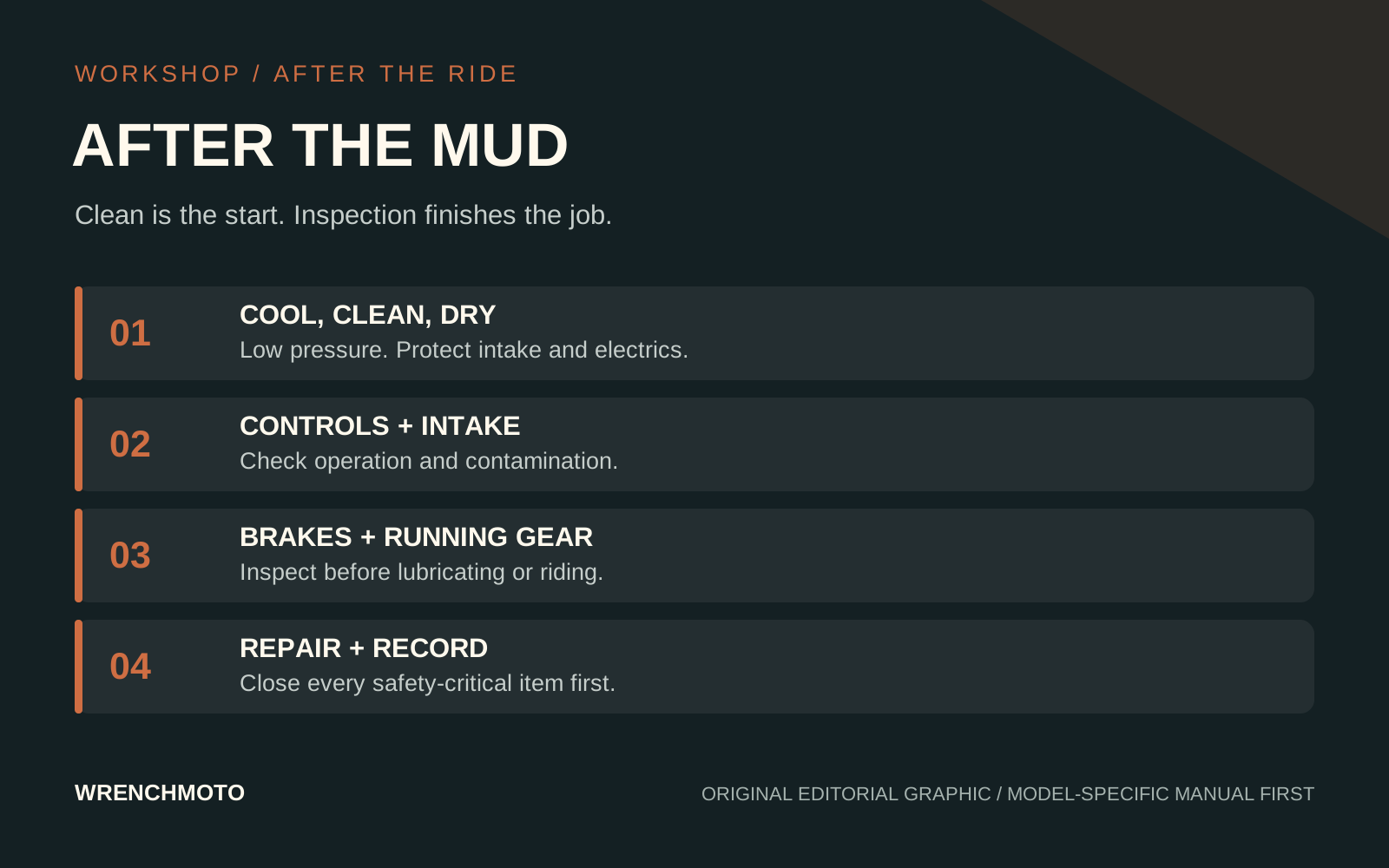
The last job after a muddy ride is deciding whether the bike is ready to ride again. Washing gives you a better view; it does not close the maintenance list. Use this as an inspection order, with your model's manual beside you for access, service limits, lubrication and reassembly. It is not a substitute for scheduled work.
Make the bike visible
Let hot components cool. Honda's CRF guidance calls for low-pressure rinsing, mild cleaning and careful drying, while keeping water away from the intake, exhaust outlet and electrical parts. Avoid blasting bearings and suspension pivots. Once dry, lubricate as specified and keep every lubricant off tires and braking surfaces. Water can reduce brake effectiveness, so Honda also calls for a gentle, low-speed brake-drying check after washing. [1]
Choose a firm, level work area and support the bike securely before any wheel-off-ground inspection. Leave the engine off. Keep hands, rags and brushes away from the chain-and-sprocket pinch points; never run the engine to spin the wheel while cleaning. Honda specifically warns about fingers getting caught there. [3]
Work around the bike once
Start with the intake and controls. Check the air filter for contamination and the throttle for correct operation. Then look at the cooling system, hoses and fluid levels using the bike's instructions. Honda includes all of these in its pre-ride inspection, along with the breather drain. A clean outside panel is not evidence that the filter behind it is ready. [2]
Continue to the wheels, suspension and brakes: tire damage and inflation, loose spokes or rim locks, suspension operation, and brake function. Check chain slack and lubrication, plus wear or damage at the chain guides and rollers. Inspect the steering-head area and fasteners. Use the manual's inspection methods and torque values rather than giving every visible bolt another turn. [2]
WrenchMoto workshop habit: divide the bike into front, middle and rear sections and finish one before moving on. Keep a light and a notepad nearby. Write “inspect filter” or “check rear brake” while the memory of the ride is fresh, especially if something felt different before you reached the truck.
Protect it without hiding a problem
Honda's after-competition advice includes corrosion protection for exposed steel where paint has worn, with extra attention after wet or muddy use. It also calls for a clean, dry chain before lubrication. Keep oil away from discs and pads. Follow the chain maker's instructions for your chain type rather than assuming every solvent, brush or removal procedure is suitable. [3]
If you find a leak, damaged part, abnormal play, a binding control or a brake that does not work correctly, leave that item open until it is diagnosed and repaired. A quick spray or a second rinse should not become the sign-off. If you cannot assess the fault confidently, have a qualified mechanic inspect it before riding.
Leave a useful note for next time
Record the ride hours, conditions, work completed and anything still pending. Put replacement parts on the list now, rather than remembering them at the next start line. Before the next ride, do the complete pre-ride inspection again: this after-mud check is an earlier chance to catch problems, not a pass that lasts all week.
For the next steps, see our foam-filter care guide and tire-pressure starting-point guide. Match every procedure to the exact bike and components.
Sources & technical information
- Honda CRF250R/RX: washing and washing precautions.
- Honda CRF250R/RX: pre-ride inspection.
- Honda CRF250R/RX: after-competition maintenance.
Sources checked Nov 11, 2026 (UTC). Use the correct owner and service manuals for your model. Stop and repair any safety-critical fault before riding. The graphic is a checklist, not a mechanical procedure or exact model diagram.