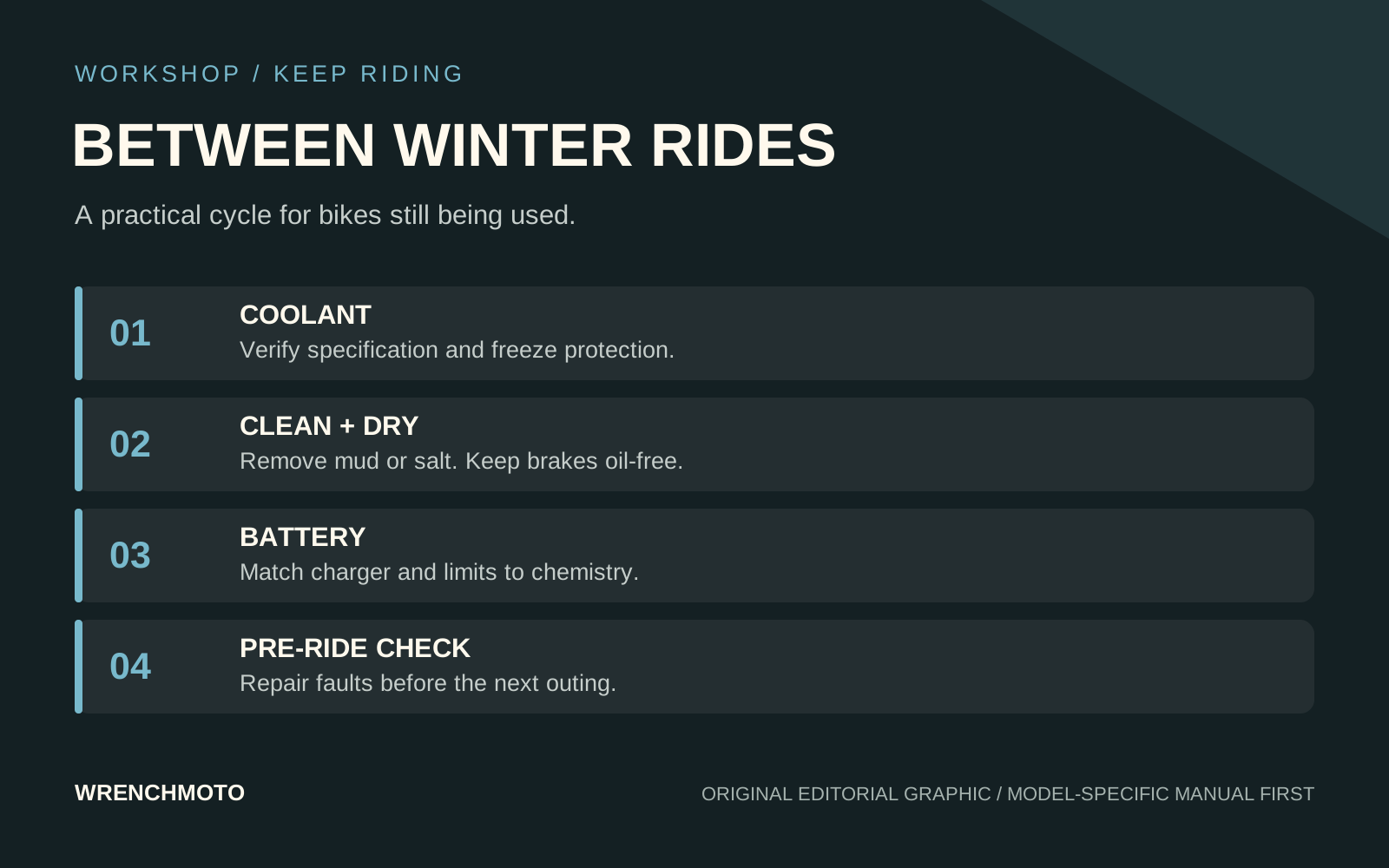
If your bike is still going out every weekend, its winter routine needs to work between rides. Keep the service schedule moving, deal with what the last outing left behind and prepare for the next one. Long-term storage advice can wait until you are actually putting the bike away.
Know what is in the cooling system
On a liquid-cooled bike, coolant does more than carry heat: Honda identifies freeze protection and corrosion control among its jobs. Check level, condition and replacement requirements using your own manual. Verify that the specified coolant and concentration protect against the temperatures the bike will encounter, including transport and overnight parking. Plain water or an unknown mixture should not be assumed to provide freeze protection. [1]
Inspect with the engine cool. Never open a hot radiator cap. A low level or visible leak needs attention, not simply another ride with an unexplained top-up. Honda's example uses a road-bike reservoir; many dirt bikes have a different inspection arrangement, so follow the actual motorcycle's procedure rather than copying that layout. [1]
Finish the wet ride properly
If the bike has picked up road salt, including during transport, remove it promptly. Motorcycle maker Maeving recommends washing salted-road contamination with cool water, then drying thoroughly. Its advice is for its own machines; use compatible products and your bike's washing instructions for the rest of the process. [2]
Keep protective sprays and lubricants away from tires, discs and pads. Honda warns that contaminated braking surfaces can greatly reduce braking effectiveness. Use its low-speed brake-drying guidance only after the bike has passed inspection and conditions permit a safe check. [3]
WrenchMoto workshop habit: make drying and inspection part of the wash, not an optional job for tomorrow. Plan a place where you can finish that work safely before water freezes. If the controls or brakes are iced up, do not ride until they are completely free and confirmed operational. Put unresolved findings on the repair list while the bike is in front of you.
Match the charger to the battery
Yuasa recommends checking battery condition and using charging equipment suited to the battery. Battery technology matters: a maintenance routine for a conventional lead-acid battery is not automatically suitable for a lithium battery. Identify what is installed before connecting anything. [4]
Honda's 2025 CRF250R/RX/RWE manual specifically requires a charger recommended by its lithium-ion battery manufacturer and directs owners to consult their dealer before charging. Follow your battery's temperature limits, connection instructions and charging requirements. Do not assume that any device marked “12 volt” is compatible, and have a battery that will not recover or hold charge checked. [5]
Prepare for the next outing
Keep a simple three-column note: ride hours, work completed, work still due. A shorter winter ride still adds operating time. Look at your model's service schedule and any severe-use instructions rather than postponing maintenance until spring. Set a reminder for the next actual service threshold, not a vague end-of-season date.
Before leaving, repeat the full pre-ride check, including tires, controls, brakes and fluid levels. Use the correct cold tire-pressure recommendation for the tire and bike rather than automatically lowering pressure because the weather is cold. If the bike is ready but the route is closed, frozen or outside your ability, change the plan. Mechanical preparation does not establish that a trail is open or safe.
Our post-mud inspection checklist covers the walk-around after a dirty ride. For bikes still being used, that repeatable wash, inspect, repair and recheck cycle is the winter habit worth keeping.
Sources & technical information
- Honda Global: the importance of periodic coolant inspection.
- Maeving: removing road salt.
- Honda CRF250R/RX: washing precautions.
- Yuasa: motorcycle battery care and maintenance.
- Honda: 2025 CRF250R/RX/RWE Owner’s Manual, battery charging.
Sources checked Nov 11, 2026 (UTC). Confirm coolant specification and freeze protection, battery chemistry and charging limits, and your motorcycle’s maintenance schedule. No universal tire pressure, fluid interval or charging setting is supplied.