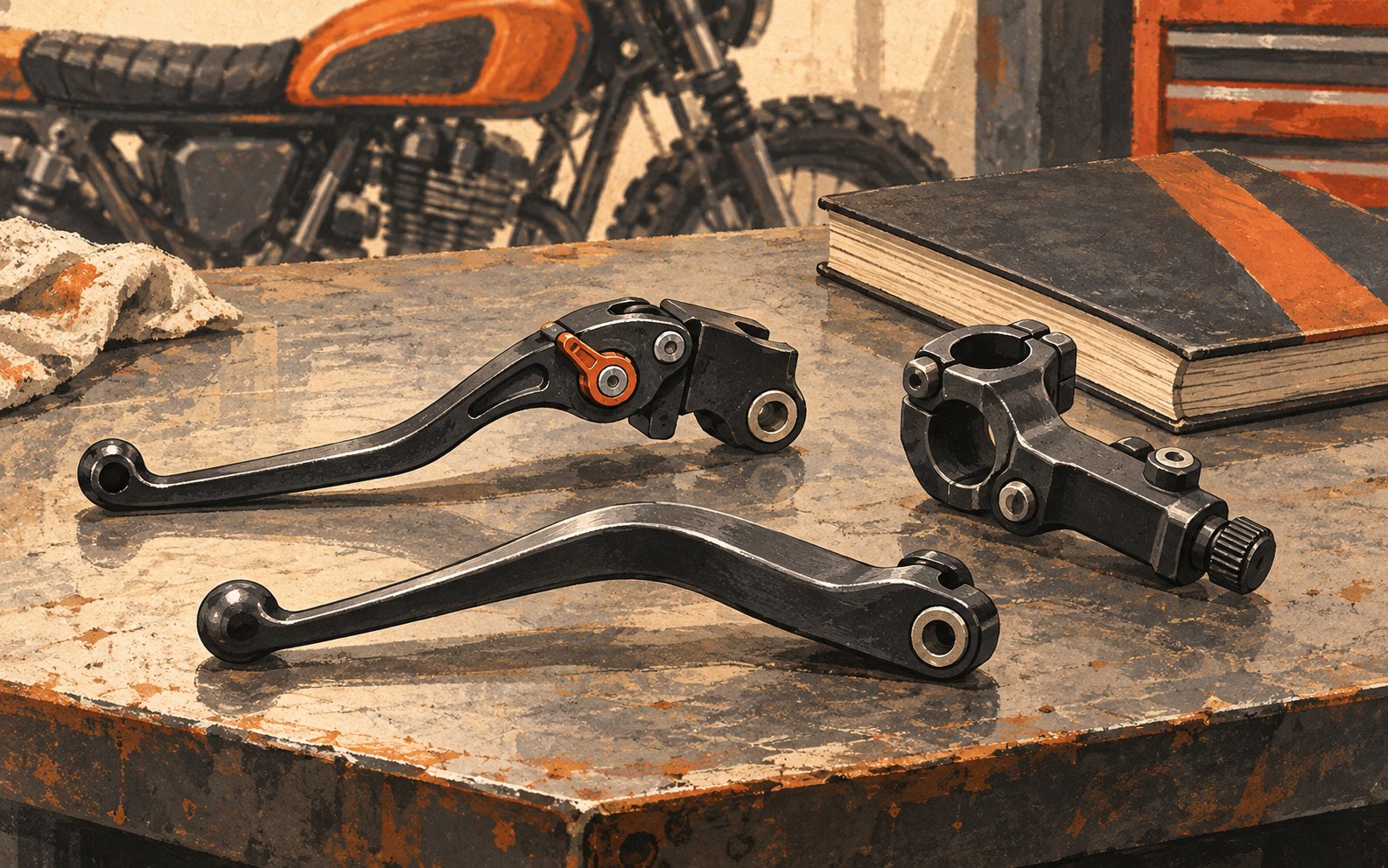
Two controls, several different systems
A lever is the part your fingers touch, but its shape is only one part of the control. Before buying, identify whether the clutch is cable-operated or hydraulic and what actually carries the front brake lever. Record the original or replacement perch and master cylinder, not only the motorcycle model. A replacement bought for the stock bike can be the wrong part for a bike whose controls have already changed.
ASV’s application charts separate motorcycle applications and include listings for aftermarket master cylinders. Its off-road instructions likewise distinguish hydraulic controls from cable-operated levers. The mounting and actuation interface must match the installed system; a pivot hole that appears to line up is not a complete compatibility check. [1] [2]
Replacement blade or complete perch?
Works Connection’s Elite 1-2-3 EZ Build is a good example of a system purchase. Its FAQ says the lever is proprietary to that system, does not fit the stock OEM perch and is not compatible with an ARC clutch lever. It also states that this setup does not work with a hydraulic clutch. Compare the complete system you need, not the cheapest isolated component with a similar color. [3]
Make a parts list before ordering: blade, pivot hardware, bushes or bearings, adjusters, cable connection or hydraulic contact parts, and any required covers. Ask what is included and which original pieces must transfer. Keep that answer specific to the part number. A complete kit for one application is not a box of universal alternatives for another.
A model-specific lever option: ASV F4 Shorty Lever Pair · CRF450R/RX example (Amazon paid link). This BCF41515-SK pair is listed for 2021–2026 CRF450R/RX. Confirm the installed controls and ASV application; it is not the CDF412 example discussed above. We may earn a commission from qualifying purchases.
Reach and free play answer different questions
Reach describes where the blade sits relative to the grip. Required free play concerns the control’s permitted movement before actuation. Treating them as the same adjustment can leave a comfortable-looking lever operating incorrectly. Use the motorcycle and lever-maker instructions together, and have a qualified mechanic resolve a conflict before the bike is ridden.
As a dated example, Honda’s 2018 CRF250R manual specifies a cable-clutch free-play check and separate front-brake lever adjustment. It also calls for checking cable condition and smooth operation. That example does not establish the required gap, adjustment method or hardware torque for a newer CRF, a hydraulic clutch or another manufacturer’s bike. [4]
A current adjustable-lever example
ASV lists the F4 CDF412 clutch lever with standard and shorty choices and an adjustable reach mechanism. That describes available blade and adjustment options; its application still needs confirmation. A shorty label is not proof of a lighter clutch pull, and a wide reach range does not establish that every setting will work safely with every grip or handguard. [5]
Our practical comparison starts with the riding glove and the space around the control. Ask whether you can reach the blade comfortably while maintaining the grip you intend to use, and whether its full travel clears neighboring parts. Do not solve a collision by accepting incomplete clutch release or a brake lever that reaches the grip before the system works as specified.
Return and clearance are essential
ASV warns that a lever slightly depressing a hydraulic master cylinder at rest can cause brake lock-up or clutch slipping. Its instructions call for verifying the correct lever, original master-cylinder pushrod arrangements and clearance from accessories such as handguards. An adjustment that leaves a control partly actuated is a fault, not an ergonomic preference. [2]
Have the installed lever checked for smooth movement, required travel and safe return before riding. For a cable system, retain the specified free play throughout the required steering checks; for a hydraulic system, follow the exact manufacturer procedure. If something binds or the brake drags, stop and arrange inspection. A new lever should not be used to disguise an unresolved cable, hydraulic or clutch fault.
Do not overlook the electrical side
ASV’s perch instructions identify a starting-interlock compatibility issue with some aftermarket installations. Resolve that before choosing the system. Prefer a properly supported compatible arrangement and qualified advice; this guide does not recommend bypassing an interlock or altering the motorcycle’s safety wiring. Confirm brake-light and other switch functions where fitted. [2]
Buy the interface you can verify
Keep photographs of the installed controls, the confirmed part numbers and the relevant instructions with the bike’s records. If ordering a spare, match the current control system rather than repeating an old OEM listing. The worthwhile change is a verified, comfortable control that operates fully and returns correctly. This is selection guidance, with no hands-on lever test or promise that an impact-folding design cannot break.
For friction-material selection, read our separate brake-pad buying and inspection guide.
A shorty lever pair to check against your controls
This is a specific CRF450R/RX listing, separate from the CDF412 example in the guide. Start with ASV’s application chart and the controls actually installed on your bike.
Affiliate disclosure: As an Amazon Associate I earn from qualifying purchases. These Amazon links are paid links. How our links work.
ASV F4 Shorty Lever Pair · CRF450R/RX example
A black F4 brake-and-clutch pair with red adjuster dials. The Amazon listing identifies this BCF41515-SK set for 2021–2026 CRF450R/RX applications.
Before you buy: Check ASV’s current application chart against the exact bike and installed perch/master cylinder. This pair is a different part from the CDF412 example above; do not transfer that example’s fitment to this set.
View on Amazon (paid link) — ASV F4 Shorty Lever Pair · CRF450R/RX example, BCF41515-SKManufacturer details · BCF41515-SKProduct identities were checked against Amazon listings, with manufacturer information used where available. Listing-specific applications are identified as such; no hands-on testing is claimed. Confirm fitment with the manufacturer, plus package contents, seller and current price before buying.
Sources & technical information
- ASV: application charts for original and aftermarket controls.
- ASV: off-road hydraulic and cable lever installation instructions.
- Works Connection: Elite 1-2-3 EZ Build perch system and compatibility FAQ.
- Honda: 2018 CRF250R owner manual, clutch and brake controls.
- ASV: F4 CDF412 clutch lever, lengths and reach adjustment.
Sources checked Oct 22, 2026 (UTC). Fitment, specifications and procedures vary; confirm the current manufacturer instructions for your exact bike and component.