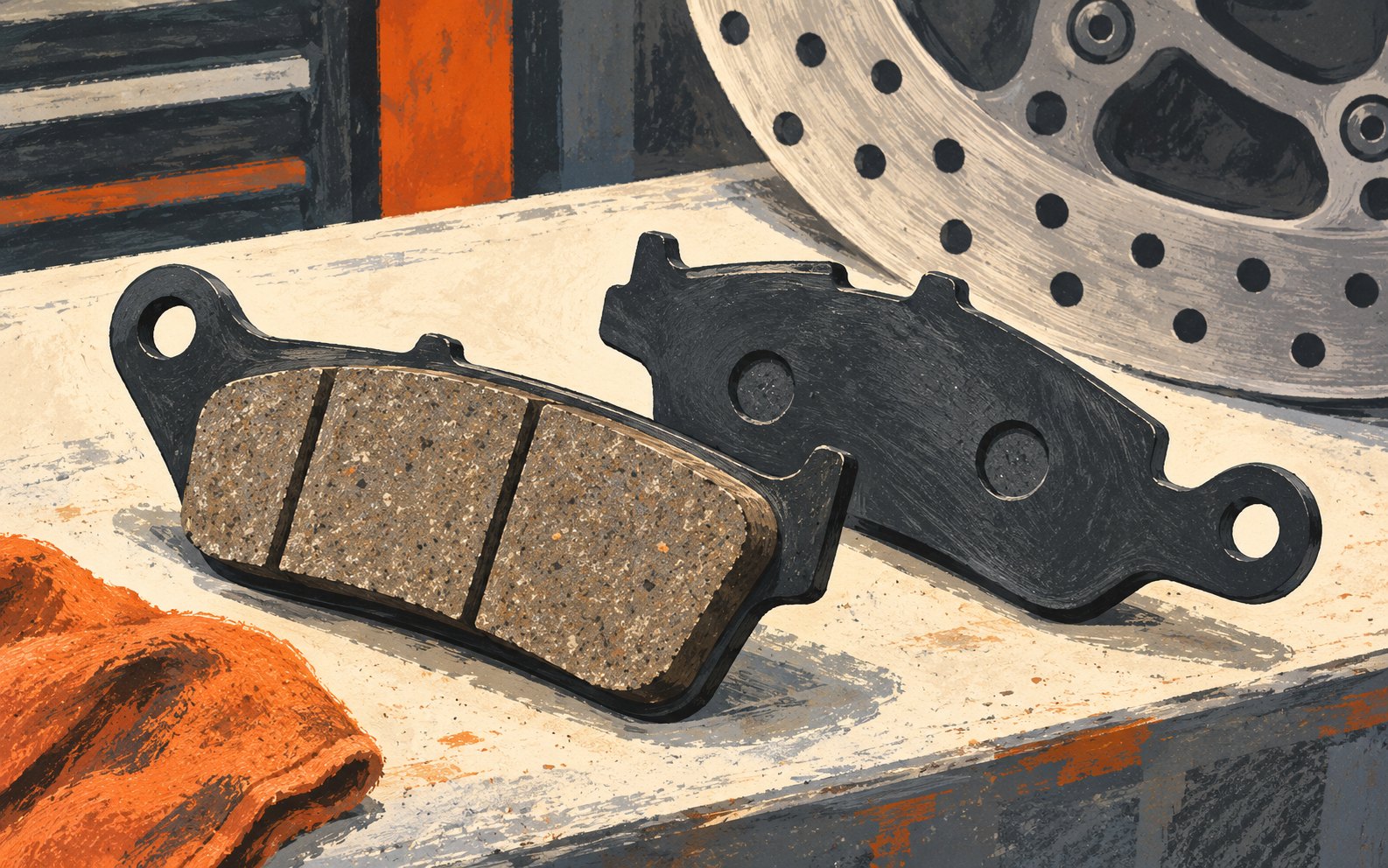
Brake-pad shopping begins with the motorcycle’s exact year, model and brake position. The same brand offers different compounds for different jobs, and a front-pad recommendation is not automatically a rear-pad recommendation. Brembo’s catalog separates road, off-road and scooter applications and distinguishes front-specific from rear-specific compounds. Start with the confirmed application listing rather than the color of the backing plate. [1]
Organic, carbon-ceramic and sintered are material descriptions, not a simple quality ladder. Brembo describes different priorities within its range, including controllability on low-grip off-road surfaces. SBS likewise separates ceramic replacement pads for non-sintered applications from sintered replacements, with specific disc-material and front/rear guidance. Compare the intended use and approved pairing, then discuss any change from the original specification with a qualified technician. [1] [2] [3]
Inspect against the correct manual
Treat an inspection as part of the purchase. Honda’s 2021 CRF300L manual, for example, uses pad wear indicators to determine replacement and says to replace both pads in the caliper together. Your own motorcycle may use a different inspection view or limit. Check every relevant pad against the correct manual; a glance at the easiest-to-see edge is not a substitute for the prescribed inspection. [4]
The disc and caliper deserve attention too. SBS directs owners to check disc thickness against the marked minimum or service-manual specification, and to investigate fluid leaks and binding. New friction material cannot resolve every braking fault. If braking is reduced, fluid is leaking or a brake is binding, stop riding and arrange professional inspection rather than treating a pad swap as the diagnosis. [5]
Plan installation and bedding-in as part of the purchase. Renthal says its pads must be fitted to the motorcycle manufacturer’s specification, while SBS publishes a dedicated bedding-in procedure for its DC compound. That specificity matters: obtain instructions for the actual pads and motorcycle, rather than following a generic internet sequence. SBS recommends an authorized workshop; have a qualified technician handle work you cannot confidently verify. The goal is a correctly matched, fully checked braking system. [6] [7] [5]
Sources & technical information
- Brembo: motorcycle brake-pad compounds and applications.
- SBS: ceramic replacement-pad application example.
- SBS: sintered replacement-pad application and disc-material guidance.
- Honda: 2021 CRF300L/LA owner’s manual, brake inspection.
- SBS: pad and disc checks and workshop recommendation.
- Renthal: motorcycle-specific brake-pad fitting guidance.
- SBS: compound-specific DC bedding-in instructions.
Sources checked Oct 22, 2026 (UTC). Fitment, specifications and procedures vary; confirm the current manufacturer instructions for your exact bike and component.