Choose the experience before chasing points
A local race can be a complete outing by itself. A season at one venue can turn that outing into a familiar routine. A regional series adds travel and the challenge of learning different circuits. None needs to be a compulsory step toward the next. Start with what your household actually wants: an occasional gate drop, a regular place to race, or a wider season to organize around.
PacWest is a useful regional example because its published series covers venues in Washington and Oregon. A traveling championship gives a family several destinations to consider rather than one home track. [1]
Three separate questions about a season
Before comparing championships, separate entry eligibility, event results and year-end award eligibility. Being allowed to try an event does not necessarily mean you have met a season’s attendance requirement. Likewise, a strong finish in one race does not tell you how the organizer calculates the championship. Read the current rules for each question and ask about anything the public pages leave unresolved.
The local examples differ. Washougal’s 2026 Classic 7 requires riders to compete and finish in five of seven rounds to qualify for its series awards. [2]
Woodland’s 2026–27 Winter MX high-point requirement is nine of eleven races. Its separate vintage, modern-beginner and pit-bike program uses seven of eight. Those requirements belong to different programs; do not combine them into one Woodland season rule. [3] [4]
For PacWest’s published 2026 program, AMA and PacWest memberships are required, all rounds count toward the championship and twelve of fourteen races are needed for year-end awards. That award threshold is a season-planning fact, not a claim that a newcomer must complete twelve races before trying one event. [5]
Make the calendar honest
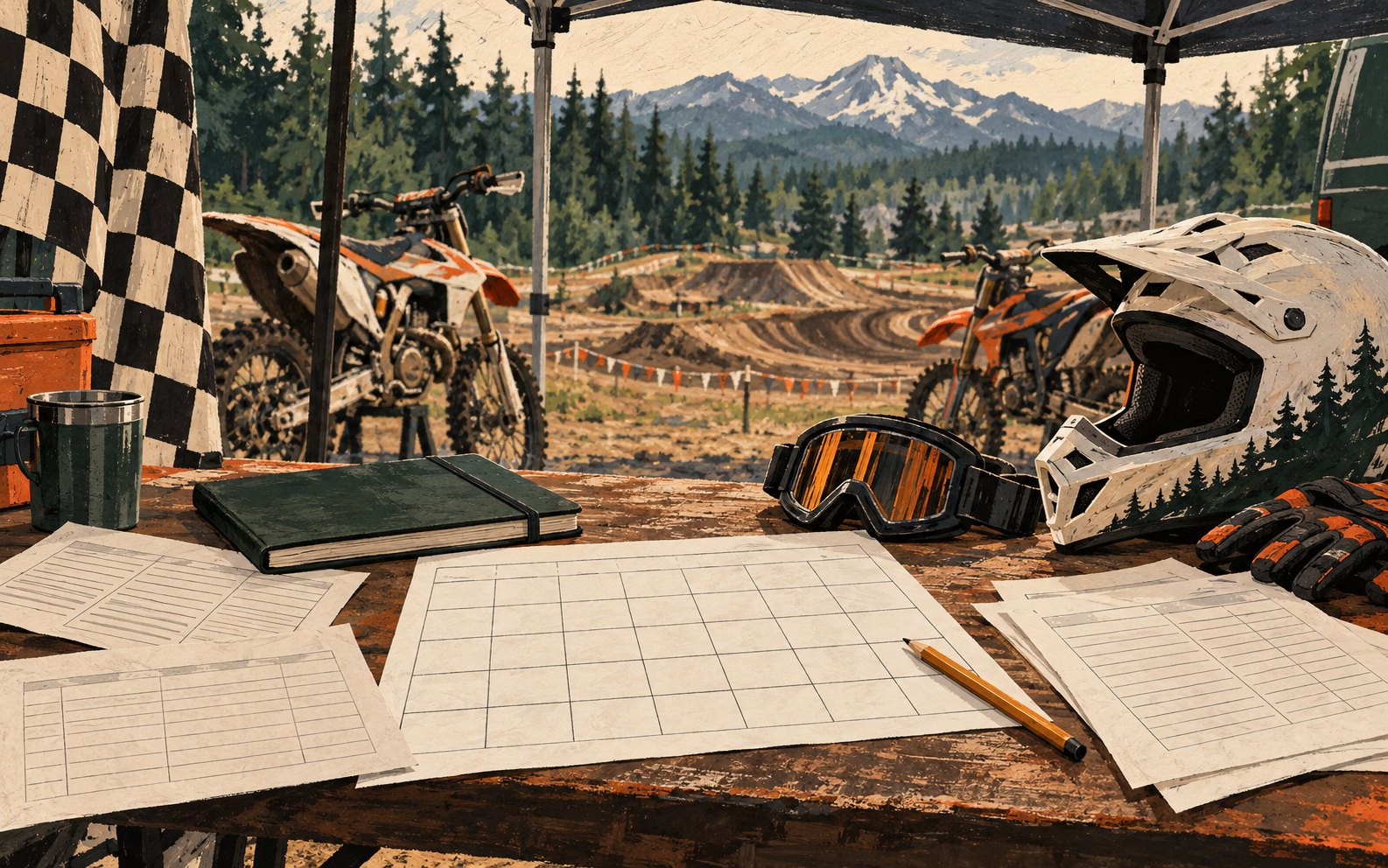
Our planning suggestion is to mark three kinds of dates: definitely available, uncertain and unavailable. Then add the travel on either side. A race that fits on Sunday may still be difficult if loading, driving, sleep and Monday responsibilities leave no margin. Do the same exercise for every participating rider and the adults who make the trip possible. A season is a shared commitment even when only one person races.
Consider a hypothetical household that can reliably make six local dates but only three distant weekends. That does not establish which championship they can win or which awards they qualify for. It tells them what questions to ask before spending: which dates count, what counts as participation or a finish, and what happens if an event changes? Compare those answers with the actual rules, not a points system borrowed from another promoter.
Class choice needs more than a birthday
PacWest’s 2026 list specifies Vet 30+ as B/C and includes a Vet 40+ C/D division. Some class-list details and FAQ statements conflict, so confirm the exact rider, motorcycle and class with the organizer rather than treating either page as a blanket eligibility answer. [6] [7]
Tell the organizer your riding history plainly. A returning rider, a first-time racer and someone moving between skill classifications can all ask different questions despite sharing an age. Keep the written confirmation with your entry information. Do not enter a supposedly easier or more prestigious class simply because friends are in it; the class rules still have to match.
A short series can be a different commitment
Washougal’s posted 2026 Triple Crown program separates Saturday practice from Sunday racing: Washougal September 26–27, Albany October 17–18 and Woodland November 7–8. As checked October 22, the first two listed weekends are past; the Woodland date remains ahead on that schedule. Reconfirm the event notice before traveling. [8]
That format is useful to compare with a longer high-point campaign. Ask whether you want one carefully prepared weekend, repeated visits to a familiar venue or a reason to experience several tracks. More destinations do not automatically make a better season. A smaller plan that leaves riders rested and families interested may serve your goals better than a calendar filled because every available round looked appealing.
Keep a record without making everything a ranking
After each outing, note the official result, any standings update and what changed in your preparation. Keep entry confirmations and the current rules alongside that record. Separate the event overall from championship points so you can ask a precise question if the totals seem wrong. We are not reproducing a PacWest numerical points table here; use the organizer’s current championship information.
Then write down something a points table cannot describe: whether the day felt manageable, whether the rider enjoyed the class and whether the family wants to return. Those answers help decide the following season. A local series can be a destination in its own right, and an occasional regional race can be worthwhile without turning the rest of the year into an obligation.
Sources & riding information
- PacWest: Washington and Oregon regional series.
- Washougal: Classic 7 series rules and check-in.
- Woodland: 2026–27 Winter MX series.
- Woodland: vintage, beginner and pit-bike series.
- PacWest: memberships, points and awards eligibility.
- PacWest: 2026 class list.
- PacWest: FAQ, to confirm against current class information.
- Washougal: 2026 Triple Crown dates and format.
Sources checked Oct 22, 2026 (UTC). Event arrangements and class rules vary; confirm the organizer’s current instructions. Written guidance does not replace hands-on instruction.