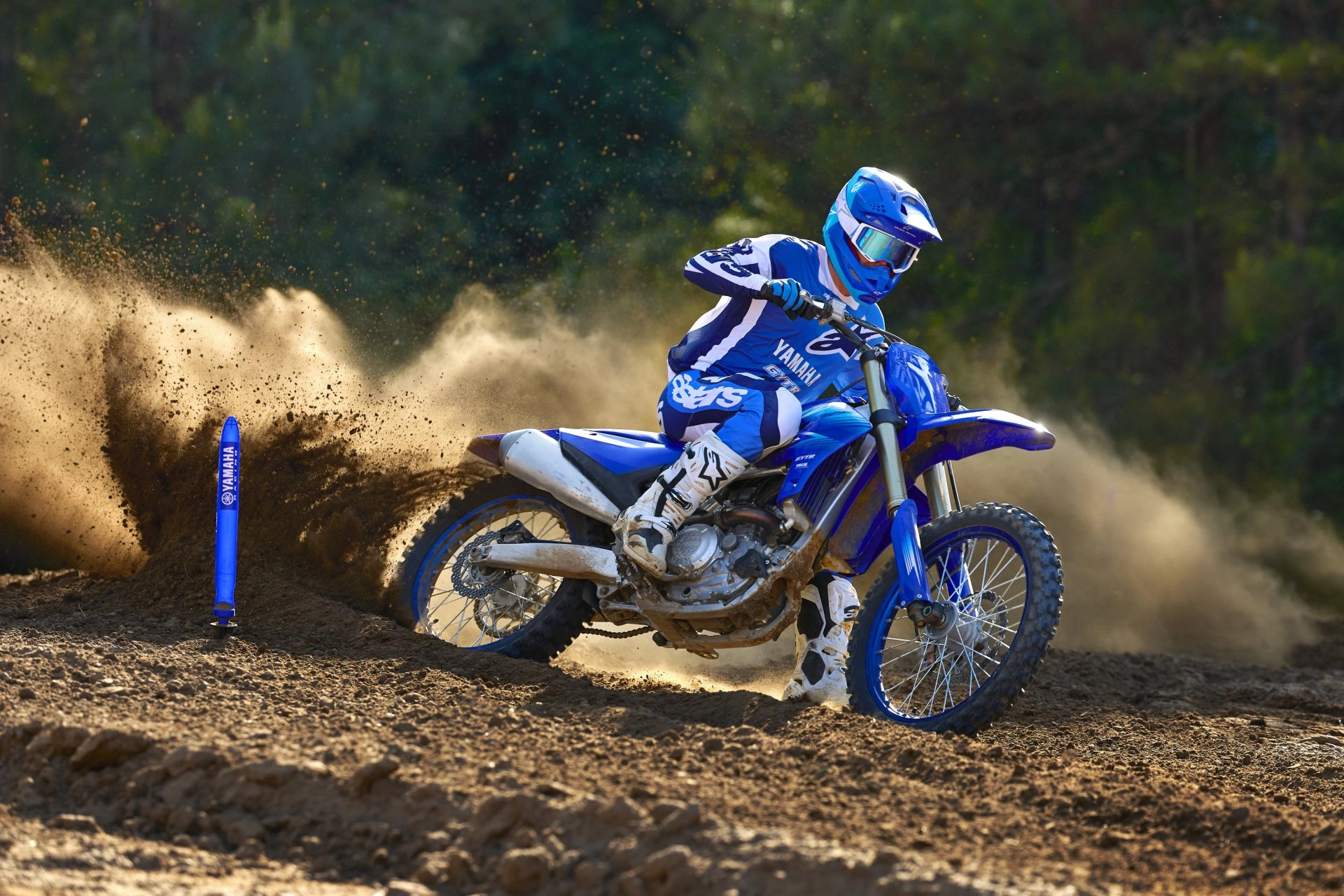
A proper redesign for 2027
Yamaha announced an all-new YZ250F on June 3, 2026, for the 2027 model year. The headline changes include a new engine, hydraulic clutch and revised chassis. This is a manufacturer-based first look; WrenchMoto has not ridden or tested the bike. Our focus is what the announcement means for an owner planning maintenance and parts purchases. [2]
New engine, new reference point
The 250-class four-stroke uses a new dry-sump engine and a revised valve arrangement with double intake-valve springs. Yamaha says the rev limit rises by 700 rpm. Those are manufacturer specifications and performance claims, not our test results. For garage planning, the important consequence is to obtain the 2027 documentation rather than carrying over an older engine’s service details by habit. [1] [2]
The clutch changes the maintenance conversation
The hydraulic clutch replaces the earlier cable-operated arrangement. Yamaha describes a system derived from the YZ450F, with revised clutch components. Owners coming from an older YZ250F should therefore check the new manual for inspection and fluid requirements. “It fits a YZ250F” is not enough information when ordering clutch or control parts across this model-year change. [2]
Chassis and brake details worth noticing
Yamaha lists a compact frame derived from the YZ450F and a revised rear braking system with a smaller master cylinder and caliper. The rear brake pedal tip is bolted on. The KYB rear shock gains a hand-adjustable low-speed compression clicker. These changes are useful prompts for a setup notebook: record the supplied baseline and adjustment method before experimenting. [1]
Add tire pressure to the setup record: JACO Elite Low Pressure Tire Gauge · 30 PSI (Amazon paid link). For conventional air-filled tires, choose a gauge that covers the specified cold pressure. This model’s working range is 2–30 PSI. Get the pressure from the actual bike and tire instructions; a launch article does not supply that setting. We may earn a commission from qualifying purchases.
Access and electronics are part of ownership too
Two-piece side covers with conventional bolt heads and an ECU-lock function in Yamaha’s Power Tuner app also appear in the 2027 feature list. Before the first ride, learn the access procedure and app setup from the supplied instructions. Save the bike’s identification and manual references alongside its service log, so workshop preparation does not depend on remembering a launch article. [1]
What should an existing owner do?
If your current bike suits your riding, an announcement alone does not answer whether a replacement is worthwhile. Compare the complete ownership cost, condition of your existing bike and what you actually want to improve. For a 2027 purchase, ask for confirmed model-year fitment on filters, clutch parts, protection and controls. We will reserve judgments about feel, durability and lap-time benefits for evidence beyond launch specifications.
Related reading: Building a tire-pressure baseline.
A general setup tool for the next ride
The redesign makes model-year documentation more important. A suitable pressure gauge can support the tire-pressure baseline linked below, without guessing which engine, clutch or protection parts interchange. Use the instructions for the actual motorcycle and fitted tires.
Affiliate disclosure: As an Amazon Associate I earn from qualifying purchases. These Amazon links are paid links. How our links work.
JACO Elite Low Pressure Tire Gauge · 30 PSI
An analog gauge with a pressure-hold reading and a bleeder button. JACO specifies a working range of 2–30 PSI for this low-pressure model.
Before you buy: Use only when your required pressure is within 2–30 PSI. Confirm valve access and the analog 30 PSI version; this gauge does not set the correct pressure for your bike or replace suitable bead-seating equipment.
View on Amazon (paid link) — JACO Elite Low Pressure Tire Gauge · 30 PSI, Elite 30 PSI (analog)Manufacturer details · Elite 30 PSI (analog)This is a general workshop-tool selection, not a verified 2027 replacement-part application. Confirm the gauge range and valve access; mousse inserts are not checked with an air-pressure gauge. No new hands-on testing, prices or stock promises are added.
Sources & technical information
Sources checked Oct 22, 2026 (UTC). Fitment, specifications and procedures vary; confirm the current manufacturer instructions for your exact bike and component.