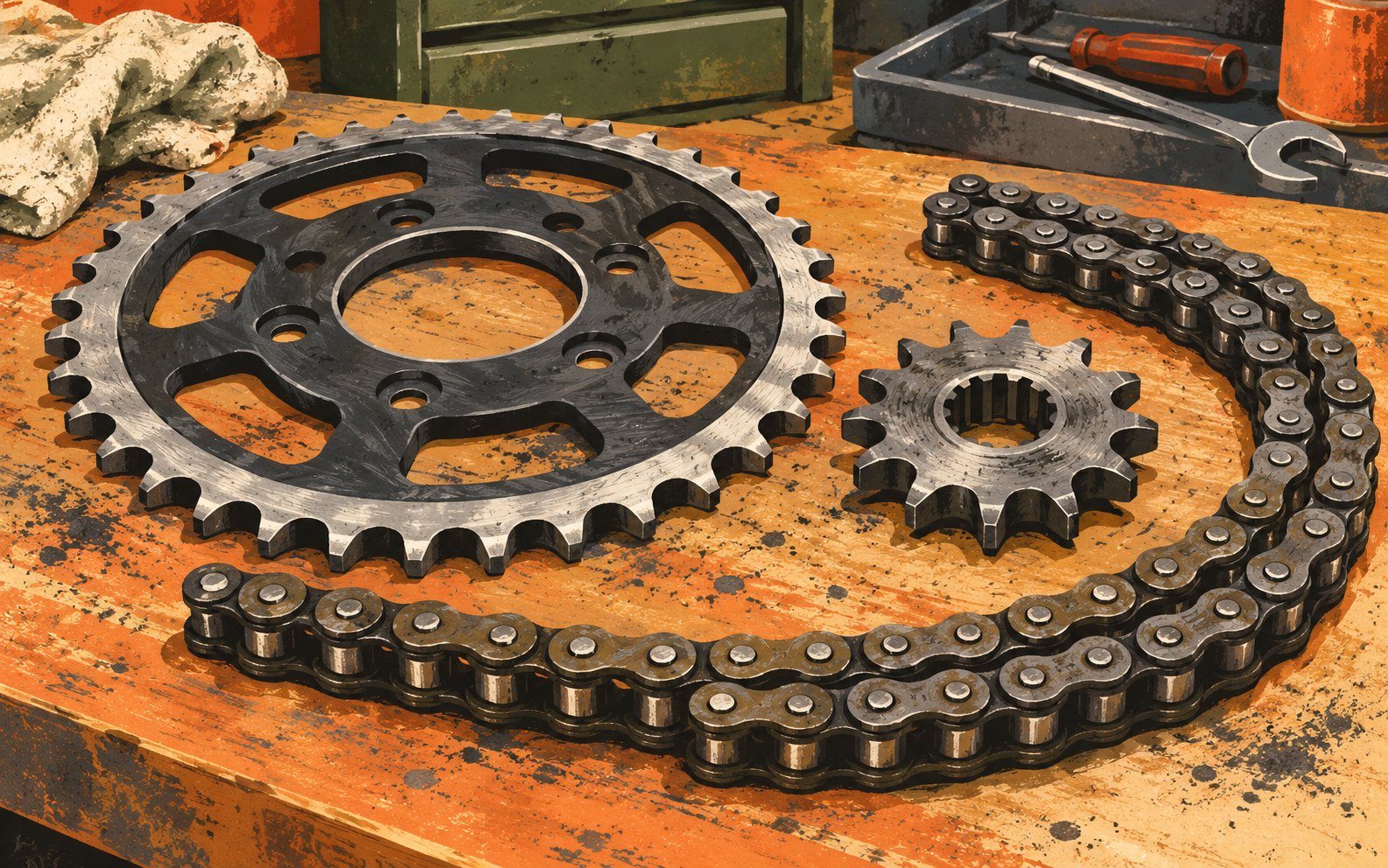
A gearing change trades wheel speed against torque multiplication; it does not create engine power. Renthal explains that a smaller front sprocket or larger rear sprocket produces shorter gearing, while the opposite combination makes gearing taller. Taller gearing can increase potential top speed only if the engine can actually pull it. Choosing a ratio starts with the problem you want to solve. [1]
Work through the ratio
The arithmetic is straightforward: divide rear teeth by front teeth. A hypothetical 14-tooth front and 49-tooth rear combination has a 3.50 final-drive ratio; keeping that front sprocket and fitting a 51-tooth rear gives about 3.64, roughly four percent shorter. At the same road speed, in the same gearbox gear and with the same tire circumference, engine speed rises by about four percent. That is an illustration, not a fitment recommendation for any motorcycle. [1]
For competition use, describe the symptom before shopping: are you repeatedly reaching the rev limiter too early, or unable to use the available upper gears? Renthal’s track guidance treats gearing as something to revisit with circuit layout and conditions, and recommends recording what worked. Make one documented change at a time so you can separate a ratio difference from changing traction or riding pace. [2]
Check the whole chain system
Compatibility is a separate question. Verify the exact bike, year, approved chain specification, chain length, sprocket fitment and available adjustment with the relevant manufacturers. D.I.D warns that connecting links are specific to their chain model and are not interchangeable simply because the nominal size looks right. Its maintenance guidance also cautions against changing the chain or sprocket specifications required by the motorcycle manufacturer for street-legal use. [3] [4]
For a compatible clip-type link: Motion Pro Master Link Clip Pliers (Amazon paid link). The 08-0230 pliers handle retaining-clip installation and removal. They do not press the side plate or rivet a link. Follow the exact chain and link instructions, using separate tools where specified. We may earn a commission from qualifying purchases.
For compatible chain installation work: Motion Pro PBR Chain Tool (Amazon paid link). The 08-0470 PBR covers the manufacturer’s stated 520, 525 and 530 applications. Verify the exact connecting-link construction and instructions, including required measurements. It does not make different chain-model links interchangeable. We may earn a commission from qualifying purchases.
Inspect before upgrading. D.I.D identifies stiffness, rust and missing sealing rings as replacement warning signs and recommends replacing affected chains and sprockets together. Use the motorcycle service manual and chain maker’s instructions for wear limits, alignment, slack, joining method and fastener torque. A qualified technician should handle work you cannot verify. A new ratio is useful only when the final-drive assembly is correctly specified and serviceable. [4] [5]
A tool for this step: Motion Pro Slack Setter Pro (Amazon paid link). Use the correct scale for your motorcycle’s measuring method. Inspect chain and sprockets, check alignment and complete the manufacturer’s adjustment and torque procedure. We may earn a commission from qualifying purchases.
Chain installation and final-check tools
Identify the exact chain and connecting-link type before selecting tools. The clip pliers handle a clip-type link’s retaining clip, while the PBR tool serves its separately specified pressing, breaking and riveting applications. Slack and alignment tools answer different final-check questions.
Affiliate disclosure: As an Amazon Associate I earn from qualifying purchases. These Amazon links are paid links. How our links work.
Motion Pro Slack Setter Pro
A compact measuring aid with separate scales for chain slack and chain-to-swingarm distance. Use the scale that matches the motorcycle manual’s measuring method.
Before you buy: Follow the exact bike manual for position, measuring point and specification. Motion Pro excludes gull-wing swingarms. This tool does not replace a torque wrench or confirm fitment for every bike.
View on Amazon (paid link) — Motion Pro Slack Setter Pro, 08-0674Manufacturer details · 08-0674Motion Pro Chain Alignment Tool
Clamps to the rear sprocket and uses an indicator rod to help check the chain’s alignment with the sprocket.
Before you buy: Confirm sprocket clearance and the tool instructions. This is an alignment aid; it does not measure slack, verify complete wheel alignment or replace the bike’s adjustment and torque procedure.
View on Amazon (paid link) — Motion Pro Chain Alignment Tool, 08-0048Manufacturer details · 08-0048Motion Pro PBR Chain Tool
Motion Pro specifies the 08-0470 PBR tool for pressing, breaking and riveting 520, 525 and 530 chains, including the stated hollow-nose and soft-nose master-link applications.
Before you buy: Confirm your exact chain and connecting-link construction against both manufacturers’ instructions. This tool does not cover every chain size or joining method. Use the specified plate width and rivet measurements and suitable measuring equipment; have a qualified technician handle work you cannot verify.
View on Amazon (paid link) — Motion Pro PBR Chain Tool, 08-0470Manufacturer details · 08-0470Motion Pro Master Link Clip Pliers
Motion Pro’s 08-0230 uses a shorter notched tip and a longer tip to help install or remove a clip-type master-link clip.
Before you buy: Confirm the exact chain and connecting link and follow the chain maker’s installation instructions. These pliers handle the clip; they are not a chain breaker, plate press or rivet tool. They do not make links from different chain models interchangeable. Obtain any required separate tools and replace components as instructed.
View on Amazon (paid link) — Motion Pro Master Link Clip Pliers, 08-0230Manufacturer details · 08-0230Product selections are based on manufacturer information, with no hands-on testing claimed. Confirm the exact model, compatibility, package contents, seller and current price before buying.
Sources & technical information
- Renthal: gearing explained and final-drive ratio calculation.
- Renthal: choosing and recording track gearing.
- D.I.D: model-specific connecting links and chain FAQ.
- D.I.D: chain maintenance, wear and street-use specification warning — published .
- Renthal: chain-and-sprocket fitment, alignment and service-manual requirements.
Sources checked Oct 22, 2026 (UTC). Fitment, specifications and procedures vary; confirm the current manufacturer instructions for your exact bike and component.